

After completing another machine installation in Thailand, a JUYOU engineer used the opportunity to make a proactive visit to a long-term customer operating an SF-650 Essential Dual Shaft Slitter Rewinder.
The customer had not arranged a major service appointment. JUYOU took the initiative to visit the factory, check the machine under real production conditions, listen to the operators and understand how the SF-650 had been performing in daily use.
During the visit, the customer mentioned an unusual hissing sound coming from the differential shaft while the machine was running.
Rather than leaving the issue for a later service appointment, the engineer immediately began an on-site inspection to identify its exact source.
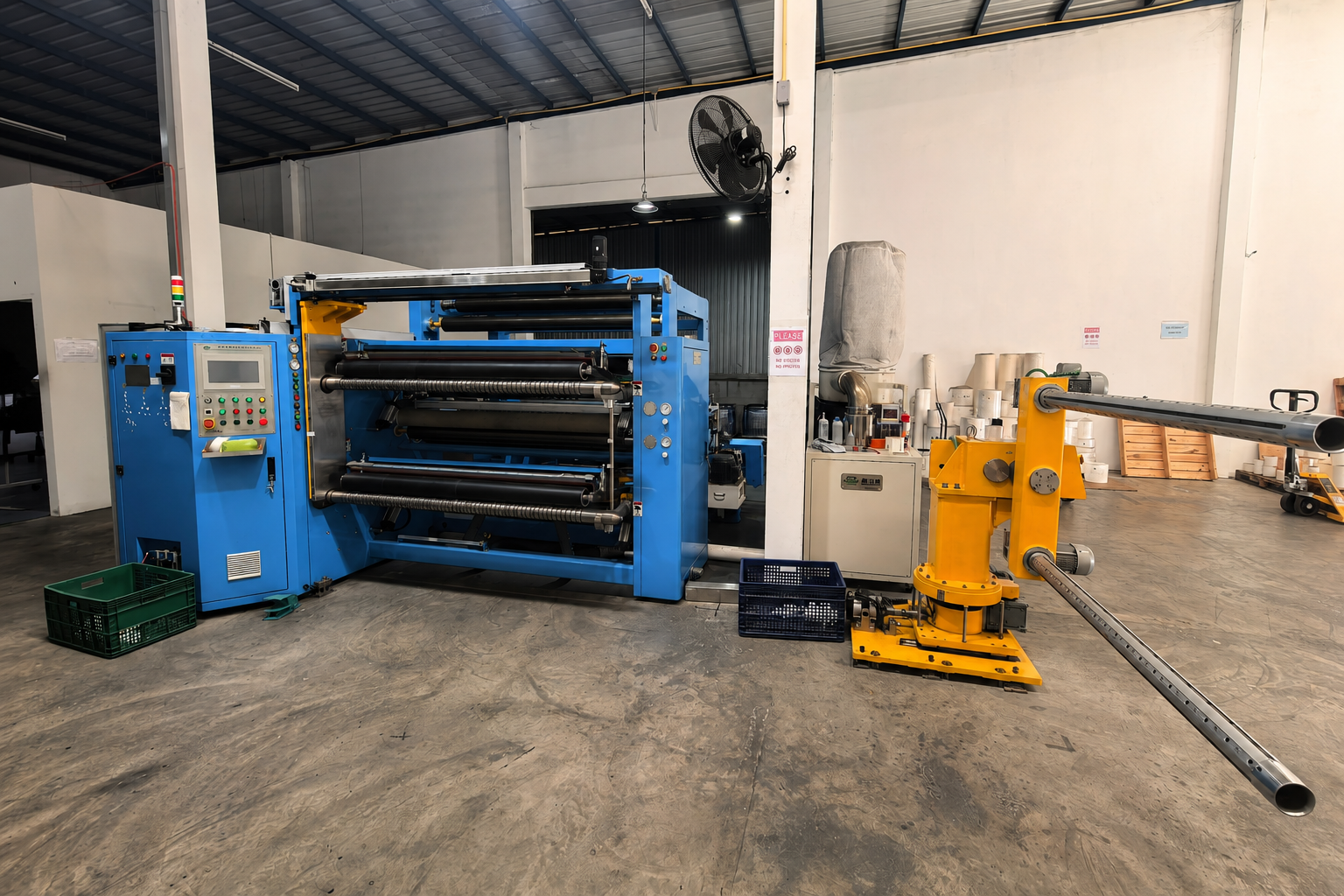
The SF-650 was inspected during a proactive visit to a long-term JUYOU customer in Thailand.
Tracing the Hissing Noise to the Differential Shaft
Abnormal sounds can provide useful diagnostic information, especially when pneumatic components are involved.
The engineer first listened to the SF-650 while it was operating and confirmed that the continuous hissing sound was coming from the differential shaft area.
A differential shaft uses controlled air pressure to support the operation of its differential rings. When the internal air bladder is damaged, compressed air can escape and produce a continuous hissing sound.
To inspect the internal pneumatic component, the engineer began removing the differential rings from the shaft.
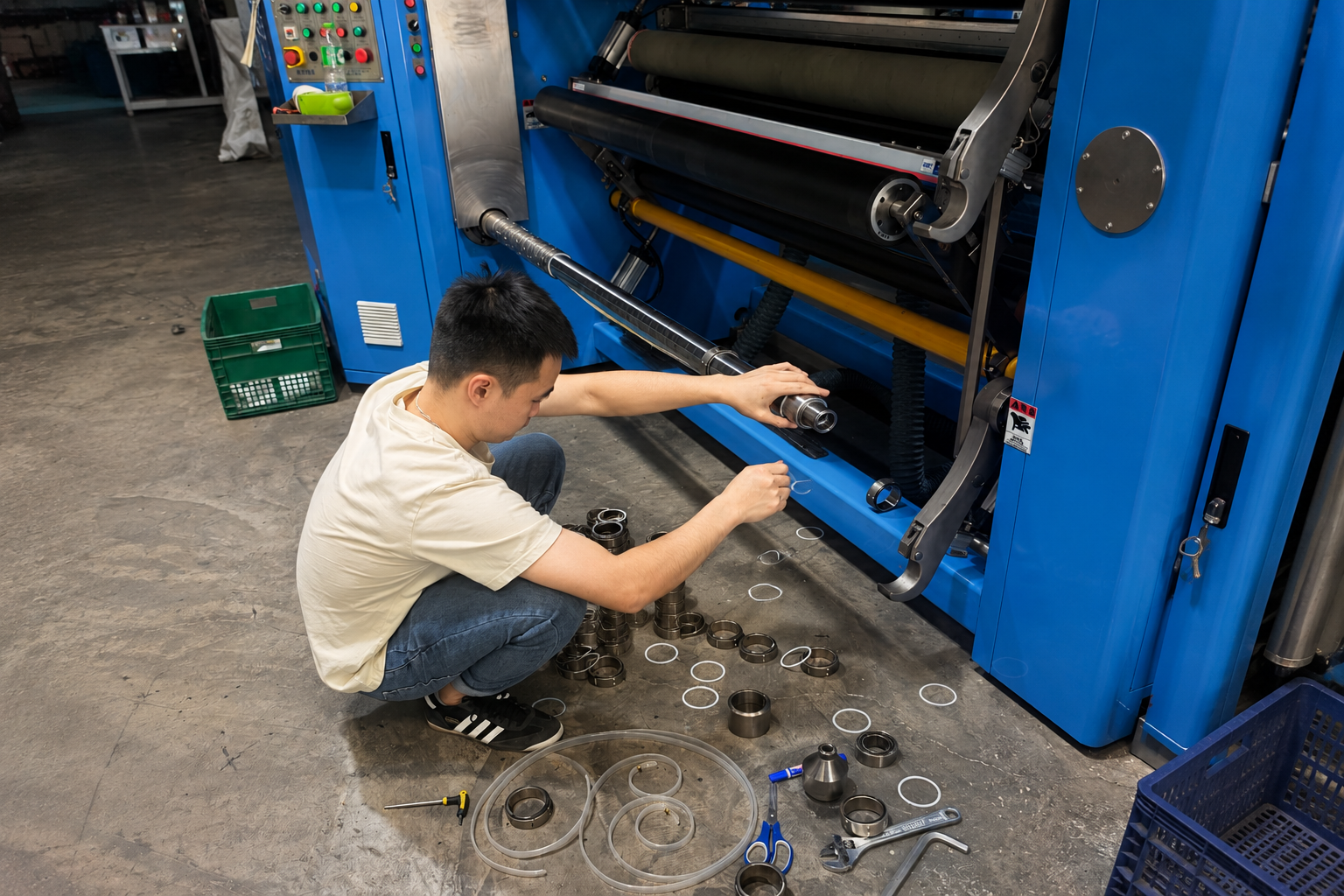
The differential rings were removed so the engineer could inspect the internal air bladder directly.
Identifying the Damaged Air Bladder
As the differential rings were removed, the internal air bladder became visible.
The damaged section could be seen immediately beneath the removed rings. This confirmed that the unusual sound was not coming from the main drive, slitting unit or electrical system.
It was caused by compressed air escaping through damage in the differential shaft’s internal air bladder.
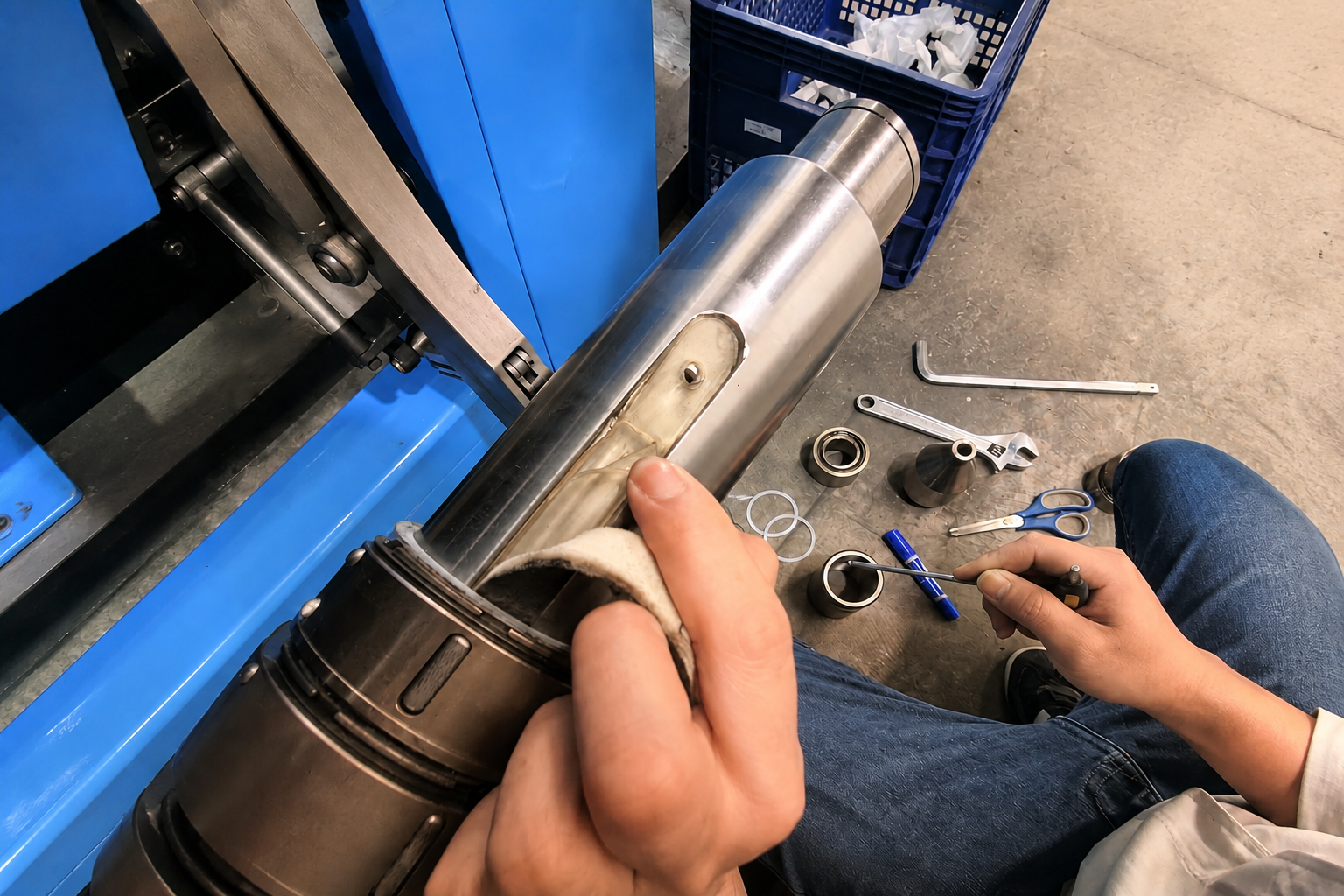
Removing the differential rings exposed the damaged air bladder inside the SF-650 shaft.
A closer inspection revealed a visible hole in the bladder.
This small damaged area was the direct source of the pressure loss and continuous hissing sound reported by the customer.
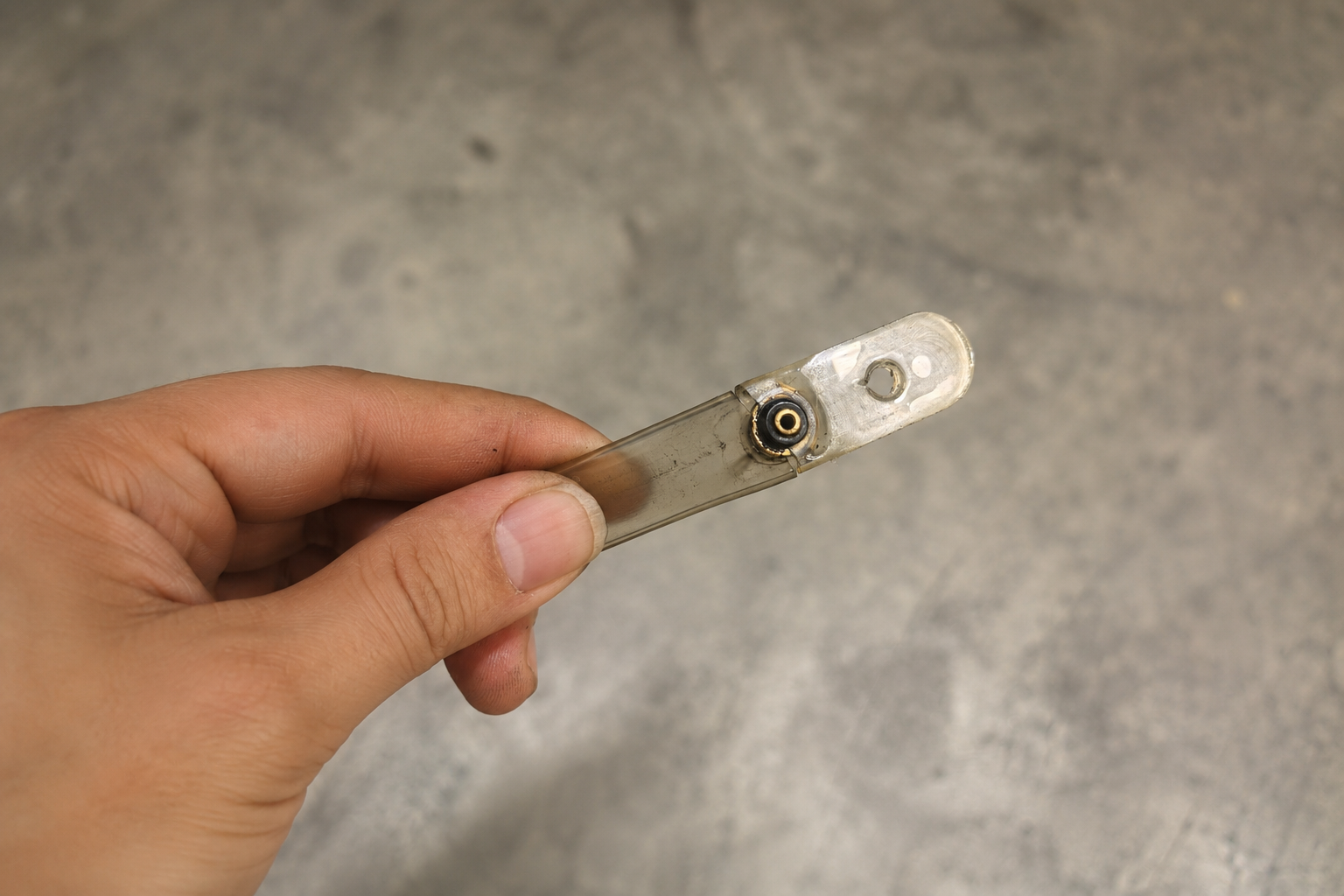
The close-up shows the hole that allowed compressed air to escape from the internal bladder.
Completing the Repair at No Charge
Once the cause had been confirmed, the JUYOU engineer repaired the affected area and checked the surrounding components before restoring the differential shaft.
The repair was completed directly at the customer’s factory during the same visit.
The customer did not need to arrange another service appointment, continue operating with an unexplained air leak or wait for a separate maintenance project.
JUYOU completed the inspection and repair at no charge as part of its support for the long-term customer.
After the repair, the engineer lubricated the related components before completing the reassembly and operating check.
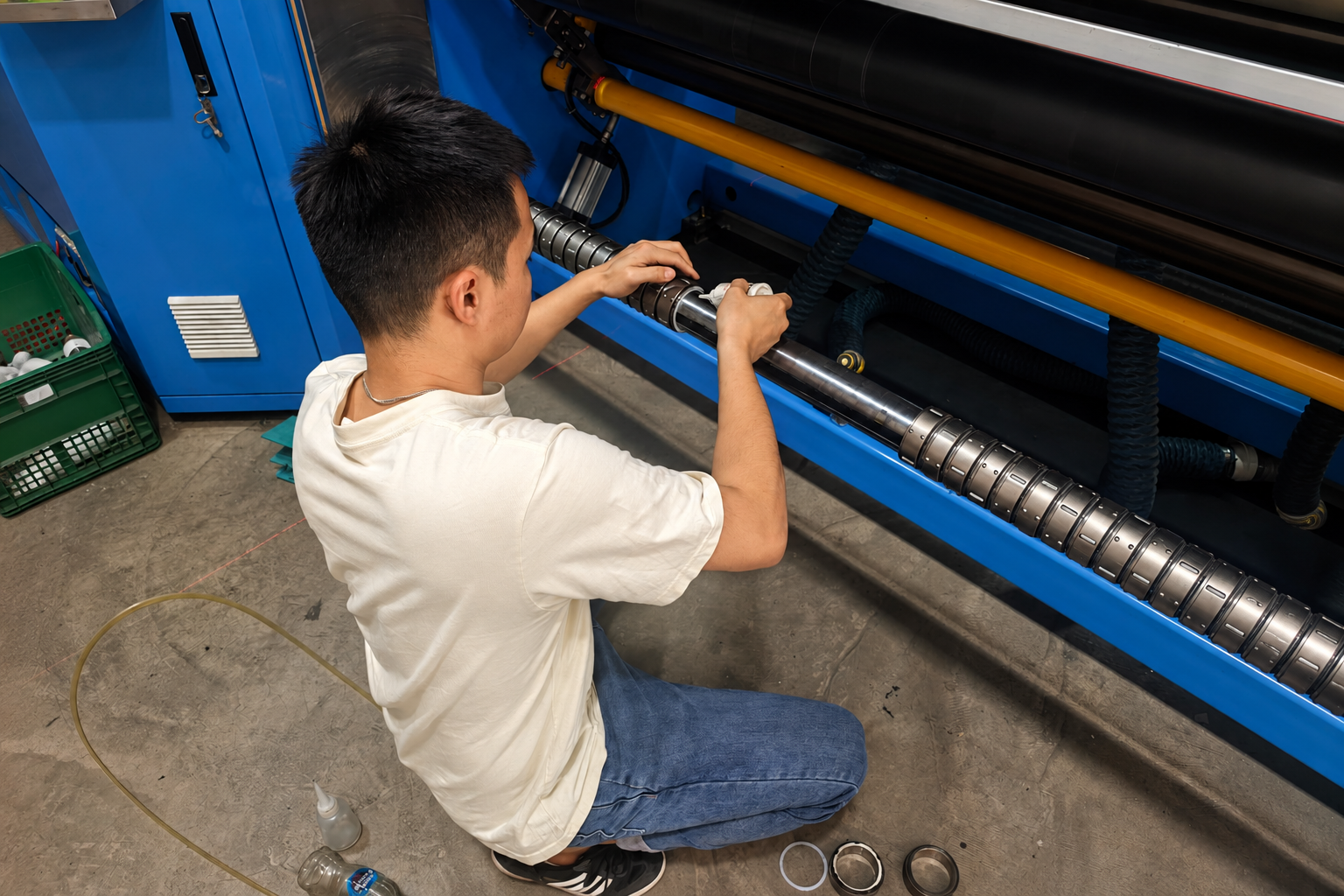
The related components were lubricated after the air bladder repair to support smooth operation and continued maintenance.
The SF-650 was then checked again to confirm that the pneumatic system was holding pressure correctly.
The previous hissing sound had disappeared, verifying that the source of the air leak had been identified and resolved.
A Proactive Visit That Prevented Further Disruption
This was not a scheduled major maintenance project or an emergency service request.
After completing another installation assignment in Thailand, the JUYOU engineer proactively visited an existing customer to inspect the condition of their SF-650 and listen to feedback from the production team.
That visit allowed the abnormal sound to be investigated before the air leak developed into a more disruptive maintenance problem.
The customer was pleased that the issue could be identified, repaired and verified during one visit without an additional service charge.
The case also demonstrates the value of inspecting equipment in its actual working environment. Operator feedback, machine sounds and component condition can reveal details that are difficult to assess through remote communication alone.
Supporting Machines After Installation
A slitter rewinder may remain in production for many years, but pneumatic components, seals, air bladders and other wear-related parts still require attention over time.
Small changes such as an unusual sound, pressure loss or unstable component response should not be ignored.
Early inspection can help identify the actual source before a relatively small issue develops into longer downtime or more extensive maintenance.
For JUYOU, after-sales support is not limited to machine delivery, installation and commissioning.
It also includes proactively returning to customer factories, listening to operators, inspecting machines that have been working for years and providing practical technical support when an issue is found.
Engineering Takeaway
A continuous hissing sound often indicates that compressed air is escaping somewhere within a pneumatic system.
In this case, the diagnostic process was straightforward:
- Listen to the machine under operating conditions.
- Confirm that the sound came from the differential shaft.
- Remove the differential rings.
- Inspect the exposed internal air bladder.
- Identify the visible hole causing the leak.
- Repair the affected area.
- Lubricate, reassemble and check the shaft again.
The repair itself was relatively small, but the service process reflects an important engineering principle: listen carefully, confirm the real cause and verify the result after repair.
Watch the On-Site SF-650 Service Video
The inspection and repair process was recorded at the long-term customer’s factory in Thailand.